

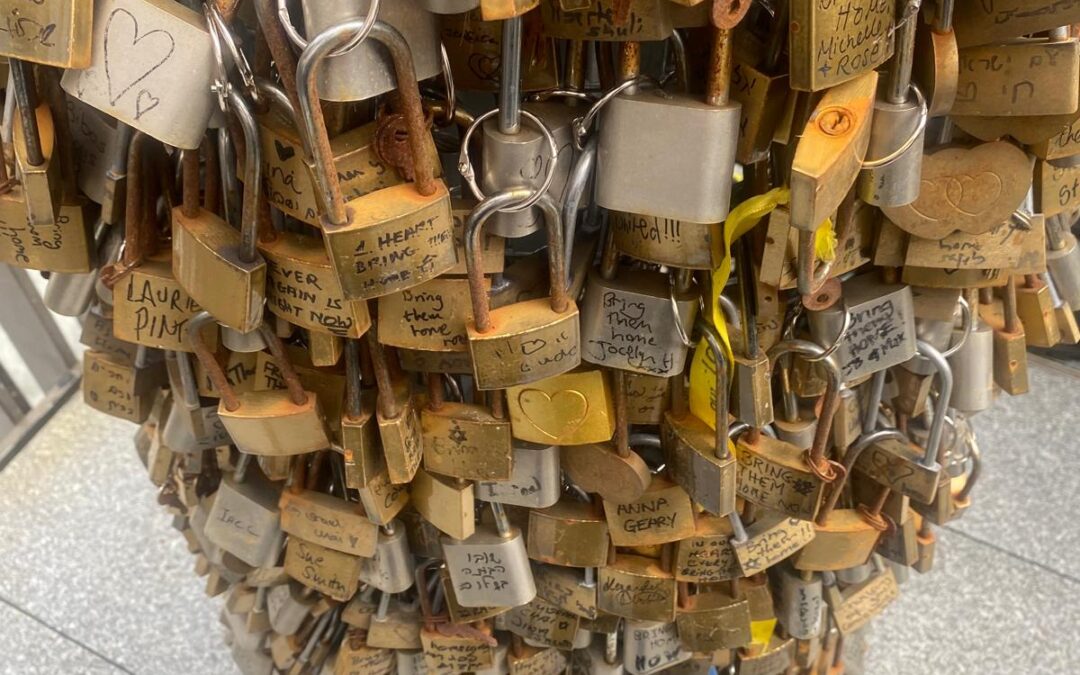
The Lovelock Hostage Bridge installation, a five-foot tall pillar comprised of hundreds of padlocks, was revealed on Sunday 29 March, with guests present including the relatives of those who were taken hostage during Hamas’s mass terror attack into Israel almost two and a half years ago.
The padlocks used in the new memorial were among those which originally featured in an installation outside the Jewish community centre which was opened in February 2024. Project creator Marcel Knobil initiated the concept of using padlocks, fastened to the bridge leading to the entrance of the Finchley Road site, inscribed with the names of Israel’s hostages to ensure they were not forgotten. Over the next 18 months, more than 5,000 locks were added, including those placed by Jewish community figures including Howard Jacobson, Dame Maureen Lipman, Vanessa Feltz, Sir Simon Schama, Tracy-Ann Oberman and Rachel Riley.
More than two years later, when the final living hostages were released, the padlocks came down with the aim of re-purposing them into a lasting memorial by international porcelain sculpture artist Sandra Shashou.
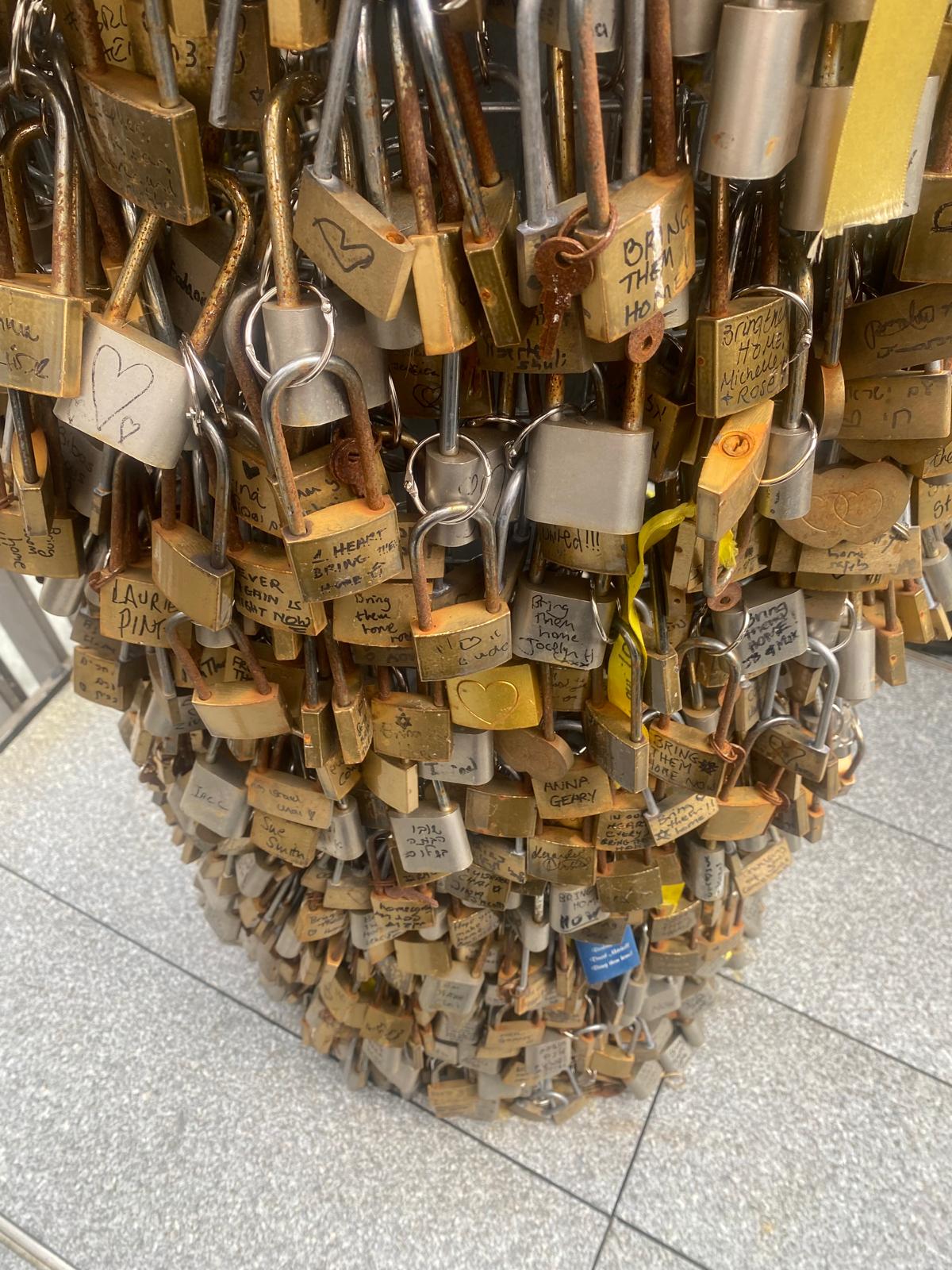
Ahead of the unveiling, JW3 chief executive Raymond Simonson said each padlock had been “placed by someone who wanted to express love, solidarity and hope. Around 250,000 people walked across our Lovelock Hostage Bridge during 2024 and 2025. But those numbers only tell part of the story. We saw hostage families come here and stand quietly.
“We saw people gather in silence. We saw MPs from across the House, moved by the collective act of solidarity. We saw people pray. We saw people weep. We even saw former hostages come and take off the lock with their name. We saw children. parents. Holocaust survivors. Jewish and non-Jewish allies. All added their own locks of love.”
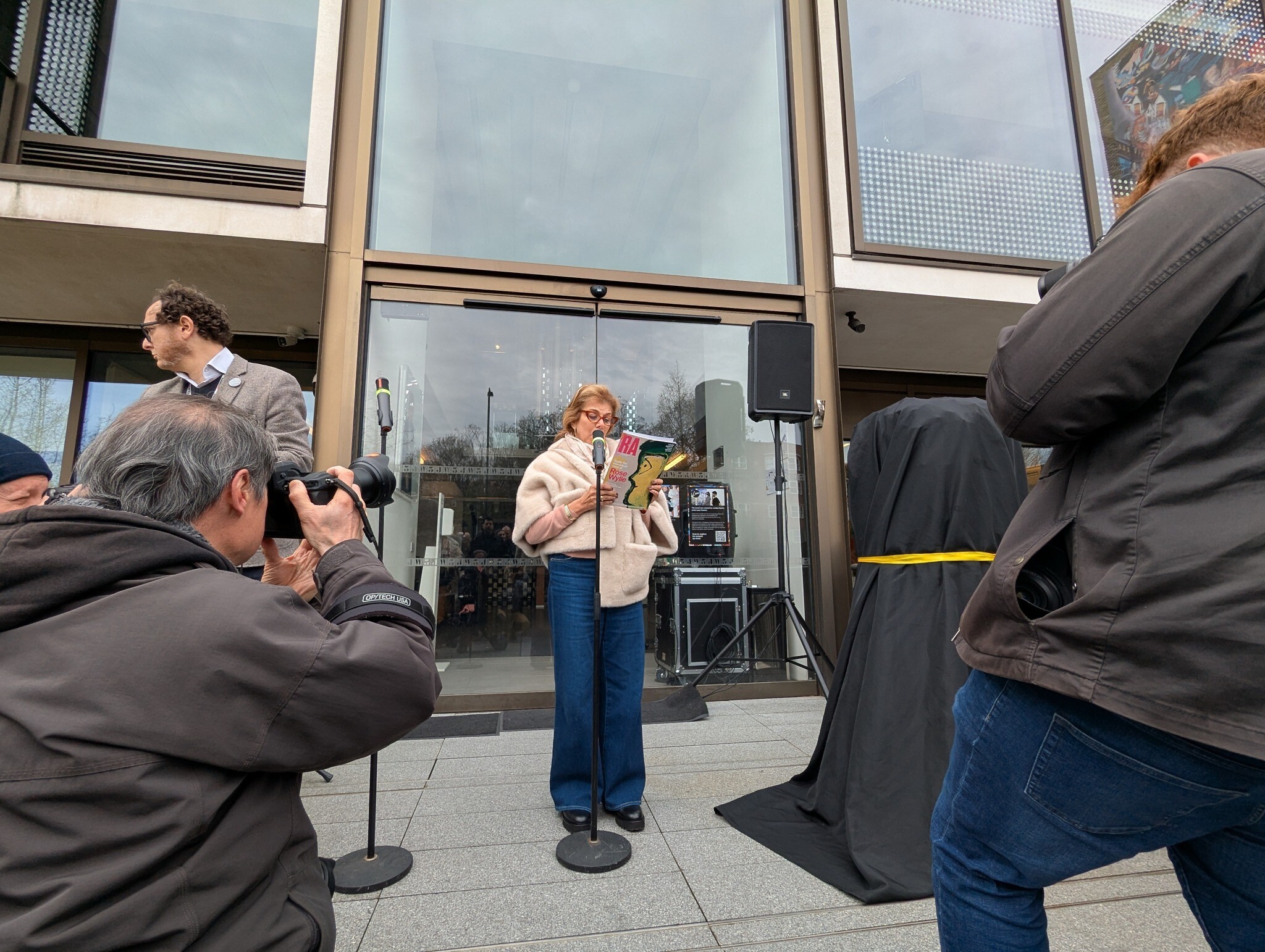
Dr Sharone Lifschitz, present at the inveiling of the new memorial, was one of the first people to originally attach a lock to the bridge. Her mother Yocheved was kidnapped and released on October 23, 2023, after 17 days; her 83-year-old peace activist and kibbutz pioneer father Oded was murdered in captivity by Hamas. Also in attendance were Orit Eyal Fibees, from the 7/10 Human Chain project, actress Dame Maureen Lipman and Shashou’s sons, daughter in law and grandchildren.
Recalling the horrors of 7 October, Dr Lifschitz said: “We must remember that each of us, who at one point saw his life shattered to ashes is a person changed. Is a person that is altered. But we must also remember what we have, and we have the strength of our hearts. We have the strength of our communities and families. I think of myself as before 7 October, an Israeli living in London for many years, and I think of myself now as an honoured member of the Jewish community.”
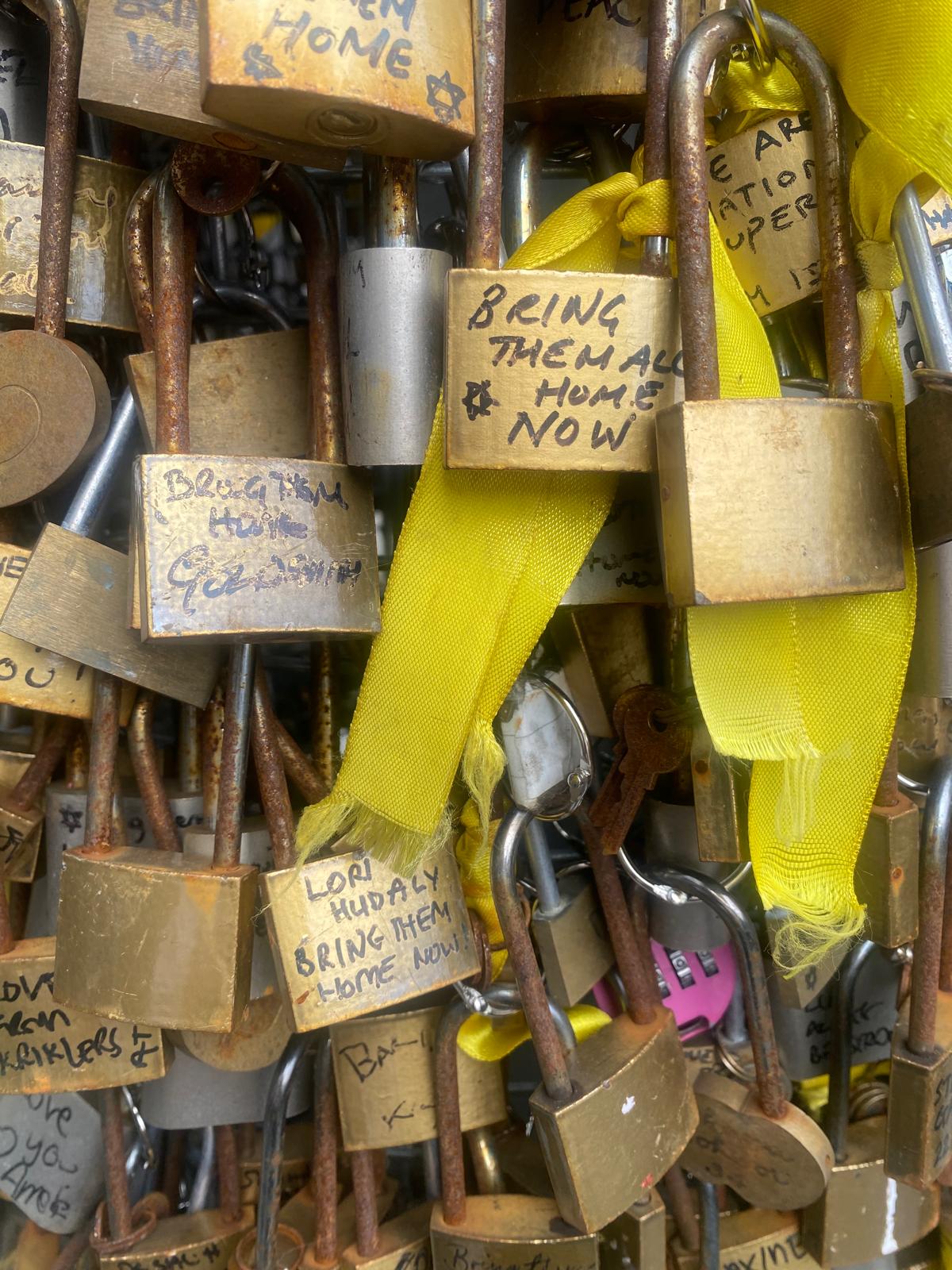
Sashou said: “These were not just objects of metal and key. They were expressions of hope, grief, solidarity and love from a community that came together during an incredibly painful time.”
Recalling the “heavy and profound” moments when the padlocks were removed, she added: “Marcel Knobil felt strongly that these padlocks could not simply disappear. They carried the voices of so many people; prayers, that anguish, that unwavering hope. To him, it was essential that they be transformed into something lasting, something that would continue to speak. This sculpture is my attempt to do just that I wanted to create a symbol, not only of captivity but of release, not only of pain, but of resilience.
“As I read the messages on each of the thousands of padlocks, I felt the depth of love, hope and heartbreak. They carried the act of locking – something that is often about holding on, but here in their transformation, these locks also represent letting go. Remembrance. And the enduring strength of a community that refuses to forget may remind us to remember, to stand together and to hold on to our community.”
Orit Eyal Fibees, from the 7/10 Human Chain project, said: “Alongside the heartbreak, something else has shifted since the October 7 here in the UK; the Israeli and Jewish communities have drawn closer than ever before. There is a sense of unity, a shared of responsibility and the care that feels both new and deeply rooted at the same time, it is only fitting that an initiative like this finds its home here at JW3.
“Just as we say, when we remember the Holocaust, we must never forget, not the pain, not the loss, and not the responsibility that comes with memory. So we have a responsibility, and this installation at this location, is exactly it – a reminder of who we are and that we must keep choosing humanity and keep fighting for peace.”
Closing the ceremony, Simonson said: “This sculpture now stands as a permanent reminder. Of the hostages and their families. Of a moment in time when people came together. And of thousands of individuals who chose not to be indifferent. May it continue to speak. May it continue to remind us.”
 Sandra Shashou is a UK-based, Brazilian multimedia artist who has a diverse practice of sculpture, photography and painting. Shashou studied at City & Guilds of London Art School with BA(Hons) in Painting. Shashou’s practice has taken a turn into sculpture with a series of positive works that reflect on major transformation through the fragility of love, which references bravery, courage and rebuilding after devastation.