

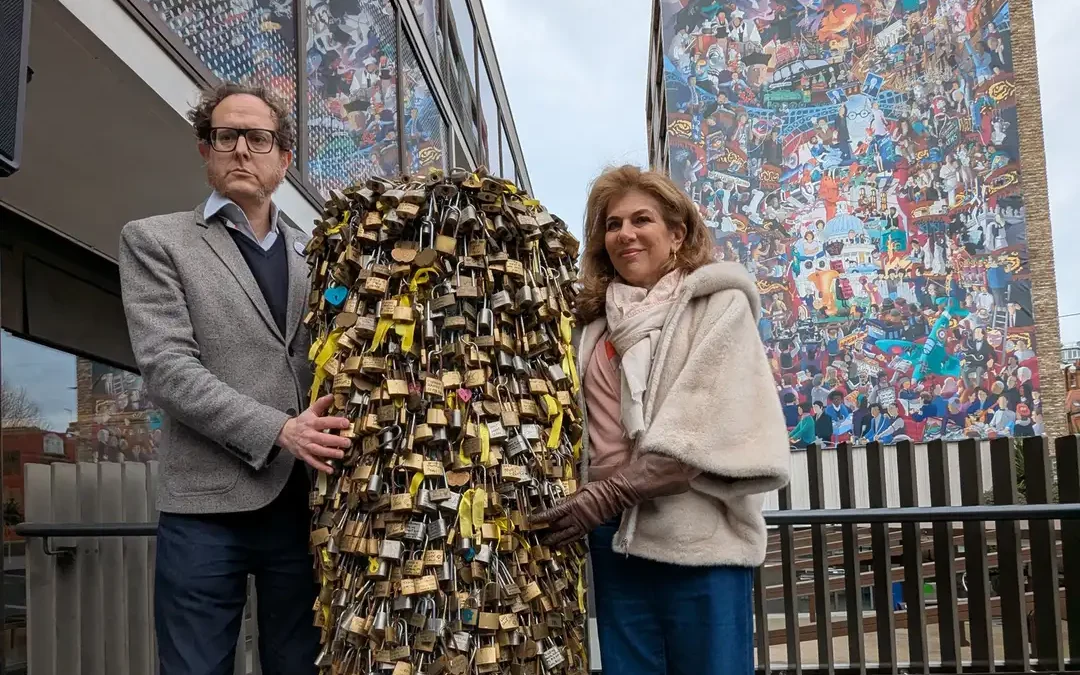
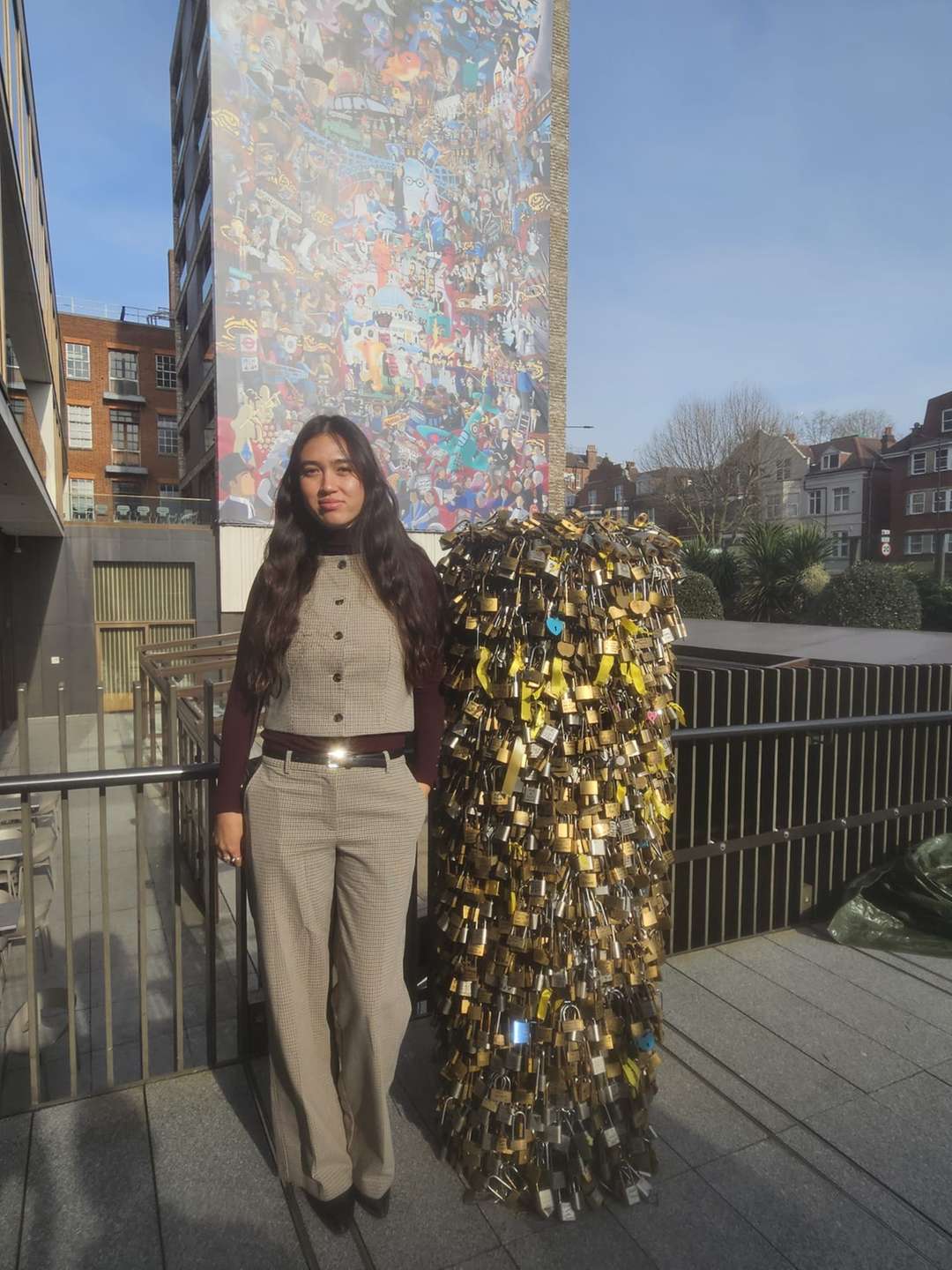
A sculpture with hundreds of padlocks from JW3’s Lovelock Hostage Bridge has been unveiled as a permanent tribute to the 251 hostages held in Gaza and the campaigning efforts of the Jewish community to see them freed.
The work, created by Brazilian-born artist, Sandra Shashou, was officially revealed on Sunday in front of some of the people who had been at the forefront of the campaign.
Speaking at JW3, where the sculpture is on display at the entrance, Sharone Lifschitz, whose mother,Yocheved, was abducted and later freed, and whose father, Oded, was murdered in captivity, said: “We must remember that each of us who saw our life shattered to ashes is a person changed. But we must also remember that we have the strength of our hearts, of our communities.”
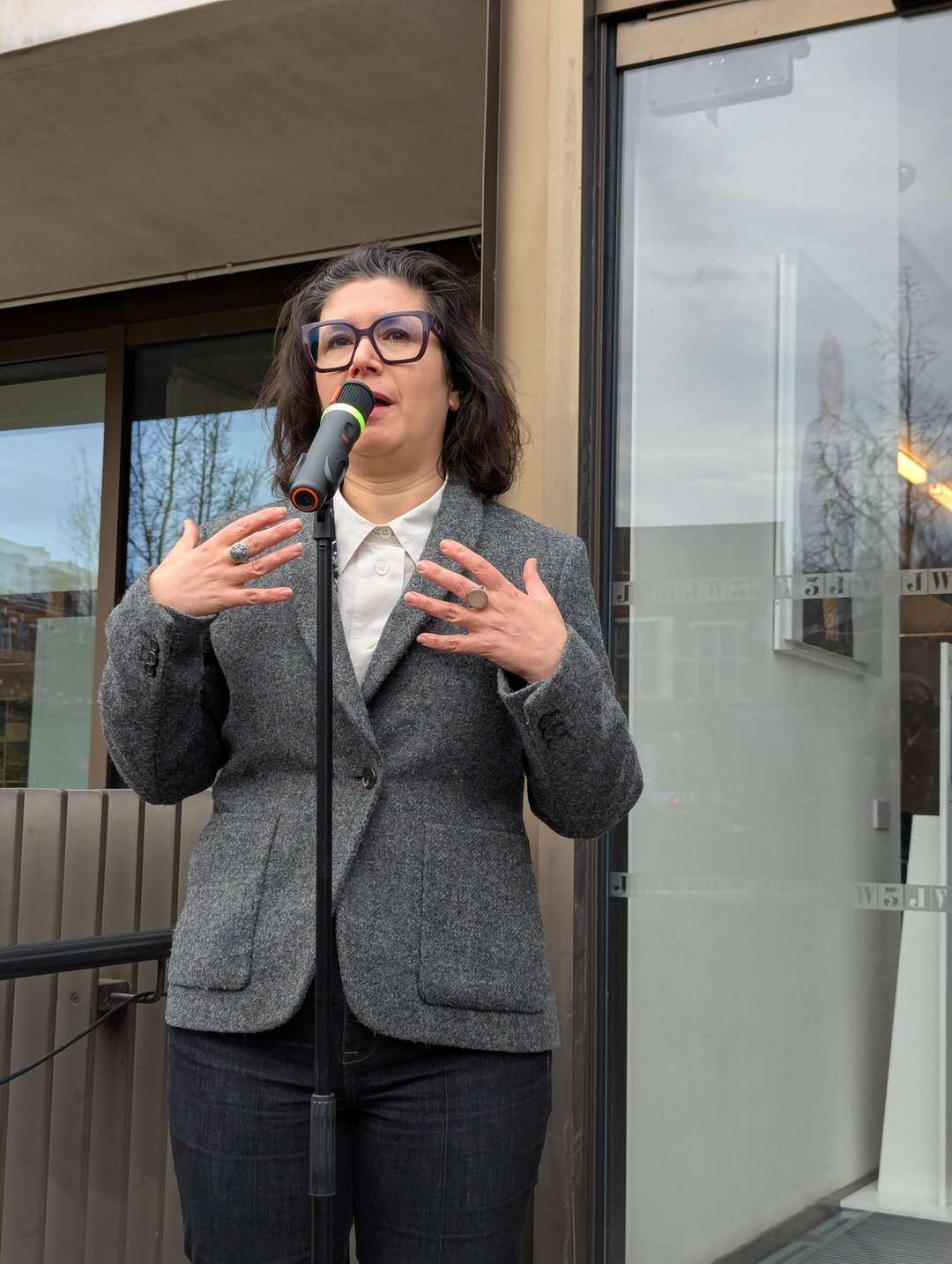
“My mum, who lost her husband and 65 members of her community, everything she ever owned except her cacti… wakes every morning and lives her life … She reminds me how people rise from the ashes.”
Lifschitz paid tribute to the UK Jewish community, many of whom she became close to during the campaign, saying that she now felt like “an honorary member”.
She added: “Above all, we must drive what we want to see – in ourselves, in our hearts and in our community, [to become places where] not only one view is allowed…. I believe we will see days of peace in the Middle East and the UK.”
Shashou, who had been one of around 50 artists who had decorated individual padlocks, which were sold in aid of the hostage campaign, said the sculpture represented “hope, love and solidarity”.
She said that the vision for the Lovelock Hostage Bridge and, more recently, the sculpture had come from branding expert and activist Marcel Knobil, who was unable to attend Sunday’s event. “Marcel felt strongly that the padlocks could not simply disappear. To him, it was essential that they were transformed into something lasting, something which would continue to speak.
“The act of locking something is about holding on, but these locks also represent letting go and the enduring strength of a community that will never forget.”
JW3 CEO Raymond Simonson said that as well as being somewhere Jewish people and Israelis living in the UK could visit and show solidarity, the bridge also became a destination for families of hostages and, latterly, the freed hostages themselves, some of whom had visited the bridge and were able to remove the padlock with their name on.
During a recent visit to the UK, former hostage Noa Argamani visited the sculpture shortly before its unveiling.
Raymond said: “We made a promise that when the final living hostages were released, the padlocks would come down. And so, on a cold and very emotional day in October, Marcel and I, along with JW3 colleagues and volunteers, carefully removed every single lock.
“But we knew that what had been created here could not simply disappear. And so today, we mark the next chapter. This sculpture, created by Sandra from many hundreds of those original locks, carries within it the voices of thousands of people from across the community. Their love. Their anguish. Their hope. It is a tribute to the hostages and their families, and it is also a lasting reminder of what can happen when people choose compassion over indifference.”
Orit Eyal-Fibeesh, who founded the 7/10 Human Chain to raise the profile of the hostages in the media, addressed guests, saying she was moved by how the UK Jewish community and Israelis living here had become “closer than ever before” since October 7. “There is a sense of unity, of shared responsibility, and of care that feels both new and deeply rooted at the same time.
“It is only fitting that an initiative like this finds its home here at JW3. Over the years, I have watched JW3 place grow into a true beacon for our community – a space where culture, conversation meet.”
 Sandra Shashou is a UK-based, Brazilian multimedia artist who has a diverse practice of sculpture, photography and painting. Shashou studied at City & Guilds of London Art School with BA(Hons) in Painting. Shashou’s practice has taken a turn into sculpture with a series of positive works that reflect on major transformation through the fragility of love, which references bravery, courage and rebuilding after devastation.